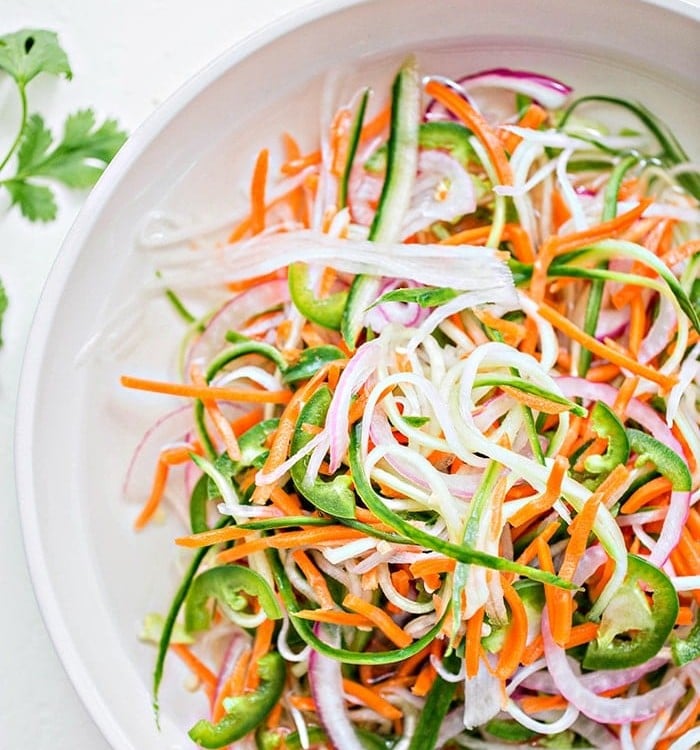
How to Make Pickled Vegetables
Making quick Pickled Vegetables is SO easy since there’s no cooking or canning required! This is a Vietnamese-inspired recipe that I love using on homemade banh mi sandwiches and lettuce wraps, but if you want to make plain pickled veggies instead of Asian pickles I’ve given instructions for how to do that too.
This post may include affiliate links. As an Amazon Associate and member of other affiliate programs, I earn a small commission from qualifying purchases.
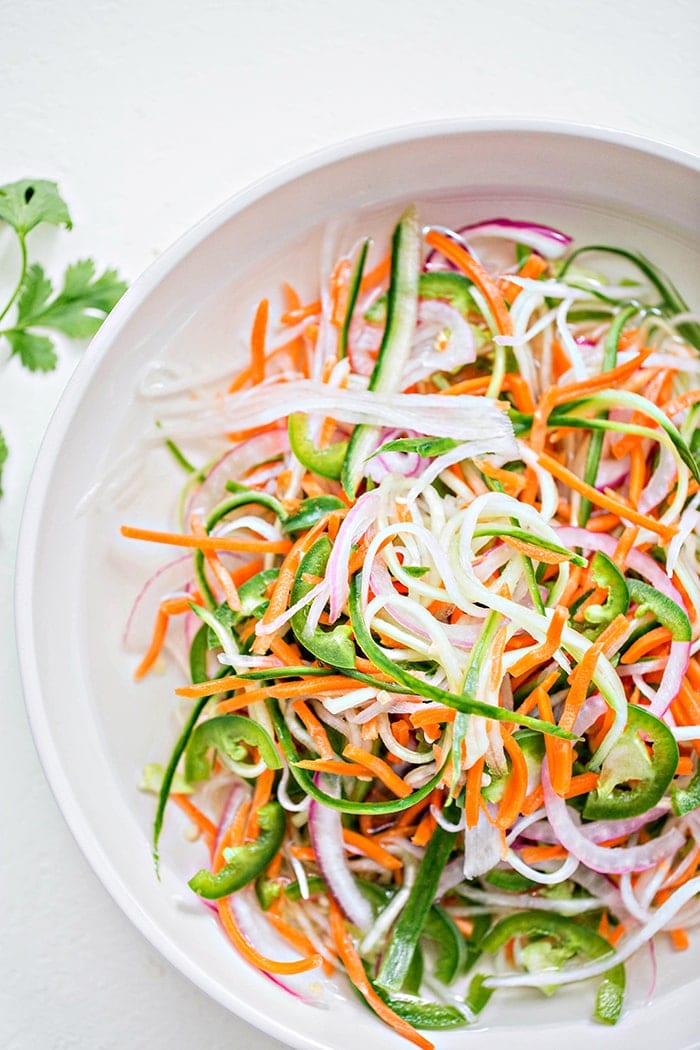
Pickling Mixed Vegetables Is So Quick and Easy to Do!
If you’ve never made quick pickled veggies before, you’re in for a real treat because the prep work is SO much easier than making regular pickles for canning.
Quick pickles don’t have as long of a shelf life (only 3 weeks if refrigerated), but they’re crunchier and fresher tasting than their canned counterparts.
Here’s why I think you should make pickled mixed vegetables too:
✔ 15-Minute Prep: I’ve made this simple recipe dozens of times over the years, and it never takes me more than 10 minutes to peel or slice all of the vegetables and make the pickling brine.
✔ Cheaper Than Store-Bought: Grocery prices are continually rising, and although you can purchase lots of pickles at the store it’s much more economical to make your own using cheap ingredients like vinegar and salt.
✔ Easy to Customize: This particular recipe makes Asian pickled vegetables, but I’ve given instructions on how to make classic pickled vegetables too. (All you have to do is swap out the vinegar, that’s it!).
Enjoy!
-Katie
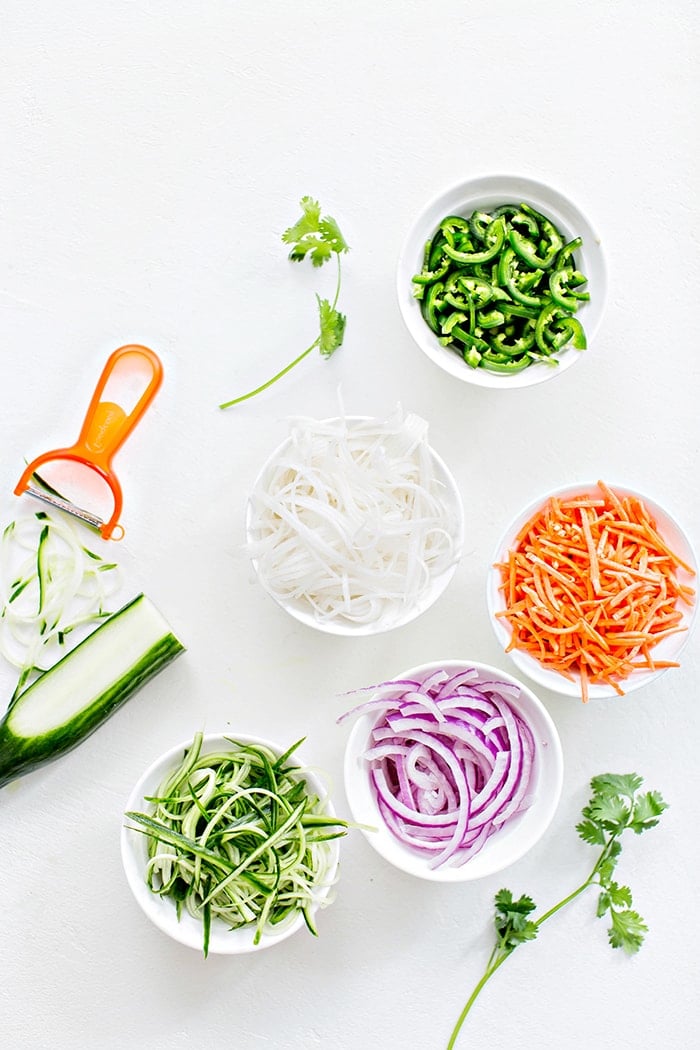
The Main Ingredients
A full list of ingredients with their measurements can be found in the recipe card below, but I wanted to go over a few notes before diving into the recipe steps.
For the vegetables:
- Daikon — This variety of radish is long and white, with a mild flavor and ultra crunchy texture. It doesn’t taste like the peppery red radishes that are most common in the US.
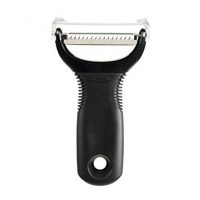
- Carrot — I shaved the carrot with my julienne peeler, but you can cut yours into small matchsticks if preferred. Avoid using big chunks of carrot, which will need to sit in the quick pickle brine for a longer amount of time to soften.
- Jalapeño — Remove the seeds if you don’t want spicy pickles, or omit the pepper entirely.
- Red onion — Takes on a sweet and tangy flavor profile after sitting in the pickling brine.
- English cucumber — This variety has a thinner skin and more delicate texture than regular cucumbers.
Katie’s Tip: In my many years of quick pickling vegetables, I’ve discovered that the best ones to use are firm and snappy. Avoid soft vegetables like zucchini and stick with things like carrots, cucumber, peppers, radishes, onion, and so on.
For the pickling brine:
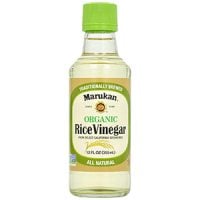
- Rice wine vinegar — Sometimes labeled as “rice vinegar.” Note that this is NOT the same as mirin or actual rice wine (which is alcoholic).
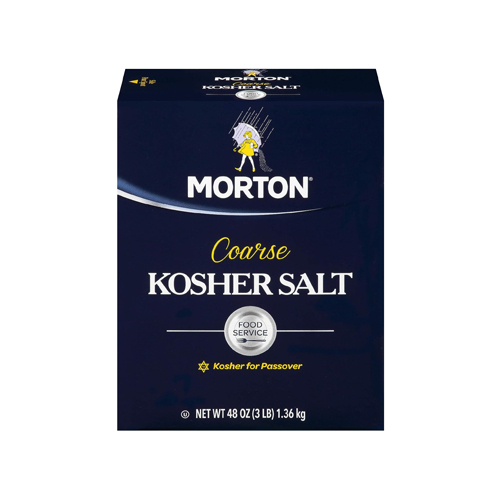
- Kosher salt — Don’t sub with table salt, which has smaller sized grains and will make your vegetables taste super salty.
- Sugar — Acts as a preservative and also balances out the tanginess from the rice wine vinegar.
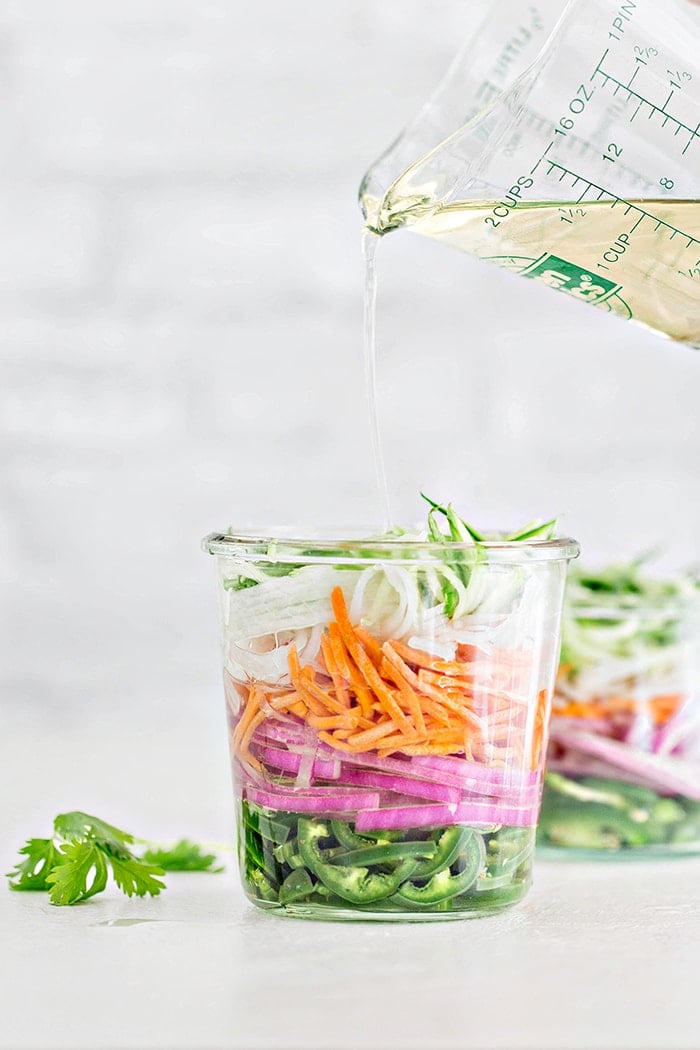
How to Pickle Vegetables
This recipe is incredibly simple because the vegetables are all sliced thin which eliminates the step of blanching the vegetables before getting started.
- Slice the vegetables. I used my julienne peeler on the daikon, carrot, and cucumber but you can slice them all with a sharp knife if needed.
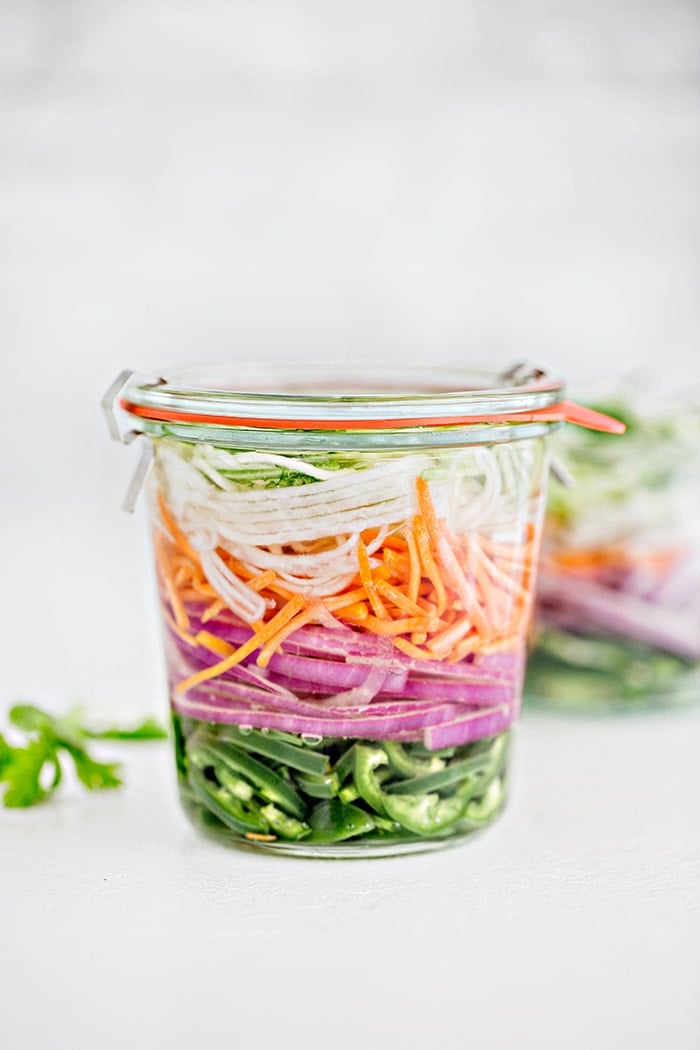
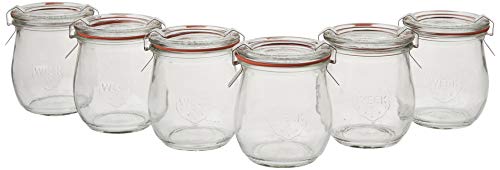
- Pack the veggies into a jar. Weck Jars are my favorite to use because they stack well, the lids are glass and can be reused and sterilized, and come in a variety of shapes and sizes. However, any glass jars with a lid will do.
- Make the quick pickling brine. Combine the vinegar, water, salt, and sugar in a saucepan and bring to a boil. Then, pour over the vegetables (make sure the veggies are fully covered by the brine).
- Cool to room temperature. You never want to place hot glass jars in the fridge because they might crack.
- Refrigerate for 2 hours. After the 2-hour mark, your pickled mixed vegetables will be ready to eat!
You can easily make this entire recipe with just a sharp knife, cutting board, and a saucepan. But using a julienne peeler will reduce the prep time tremendously and is my tool of choice for slicing the daikon, carrot, and cucumber.
Recipe Variations
You can easily adjust this recipe to use up whatever combination of vegetables, vinegar, and sweetener you have on hand. Here are some ideas to get you started:
- Omit or replace the jalapeño — If you’d prefer this recipe to be completely mild, simply omit the jalapeño. Or replace it with thinly sliced red bell peppers, banana peppers, or serrano peppers.
- Omit or replace the daikon — Daikon can sometimes be hard to find at my local grocery store, so that’s what I replace it with regular (red) radishes.
- Use some or all of the veggies — You’re welcome to make quick pickled onions, cucumbers, carrots, OR daikon, or mix and match your vegetables however you feel like.
- Substitute the rice wine vinegar — Stick with a mild-flavored vinegar that’s not too astringent, like apple cider vinegar (my top choice!), white wine vinegar, or white vinegar. Avoid balsamic vinegar and red wine vinegar.
- Substitute the sugar — You can replace it with honey or possibly agave. Do not use any artificial sweeteners since real sugar acts as a preservative here.
- To make the brine saltier — Add1/8 teaspoon kosher salt at a time until your desired flavor is reached.
- To make the brine sweeter — Add1/8 teaspoon granulated sugar at a time until your desired flavor is reached.
Katie’s Tip: Sturdier vegetables like cauliflower, beets, or green beans would require blanching beforehand.
Storage Instructions
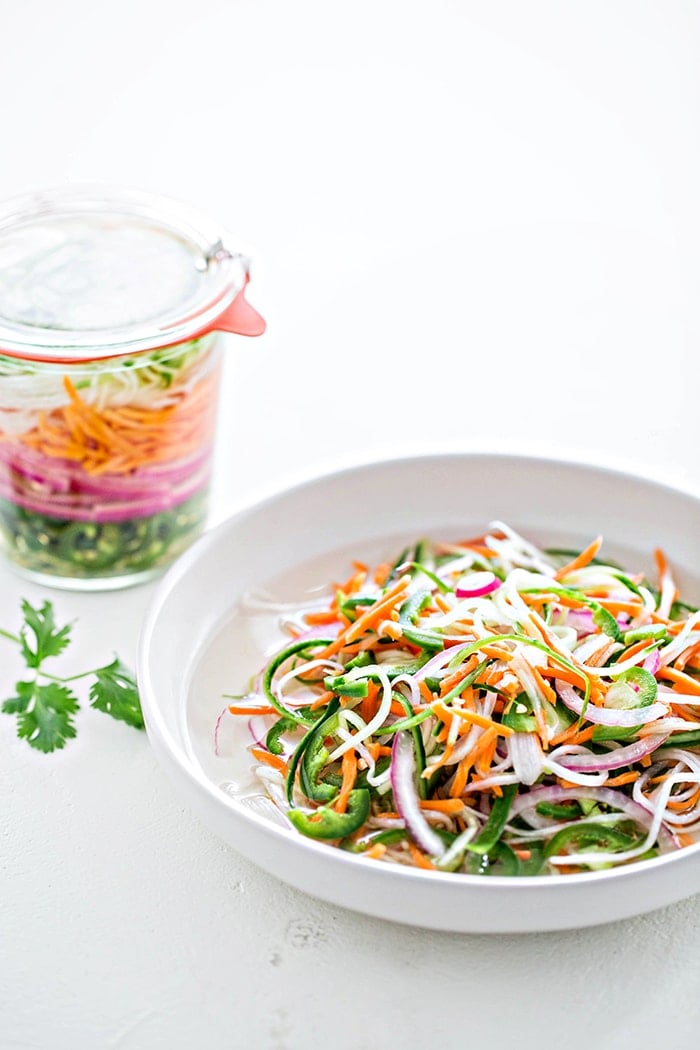
Quick pickled veggies typically last up to 3 weeks when kept refrigerated.
I think they taste best when eaten within the first week because they continue to get stronger in flavor the longer they are stored in the pickling brine.
Ways to Use Them
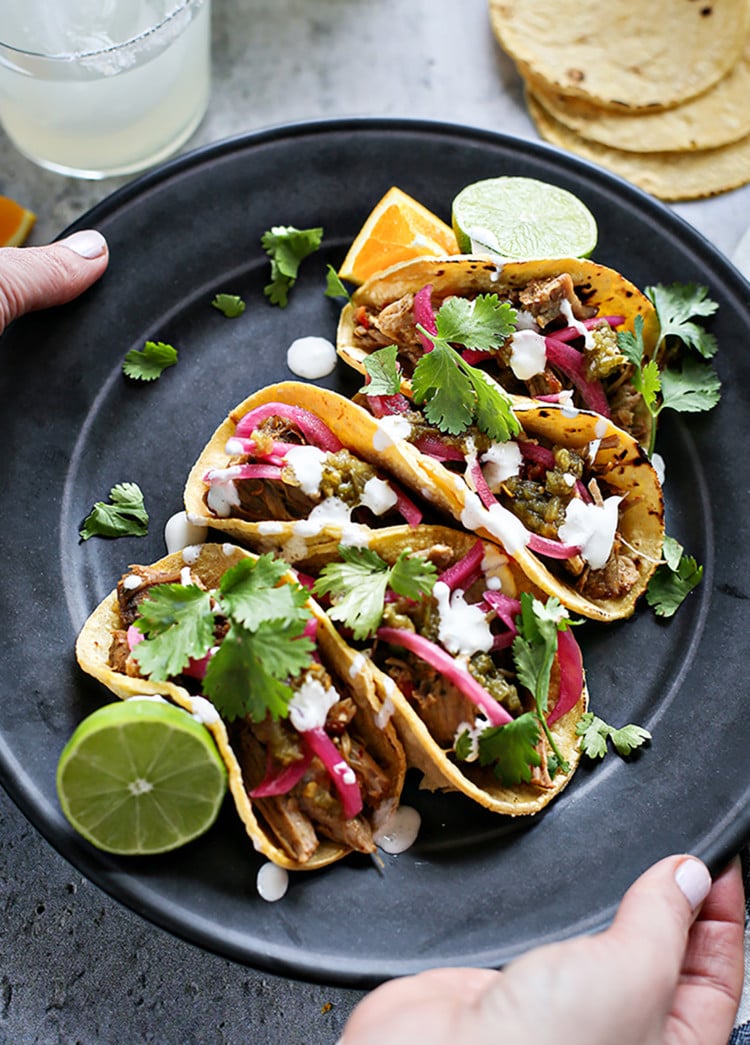
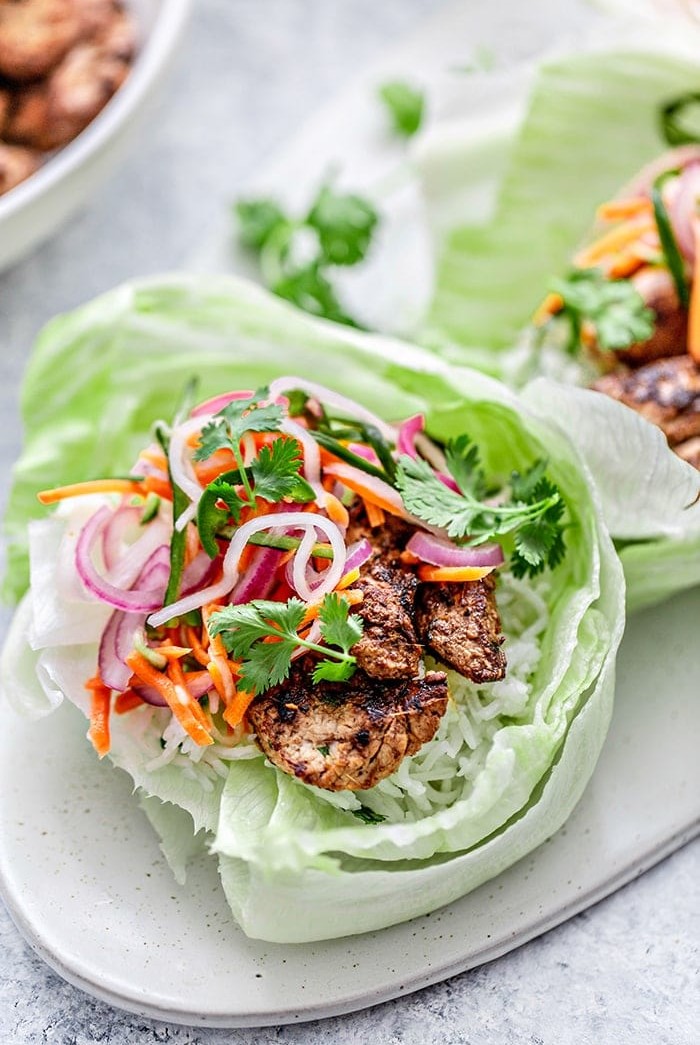
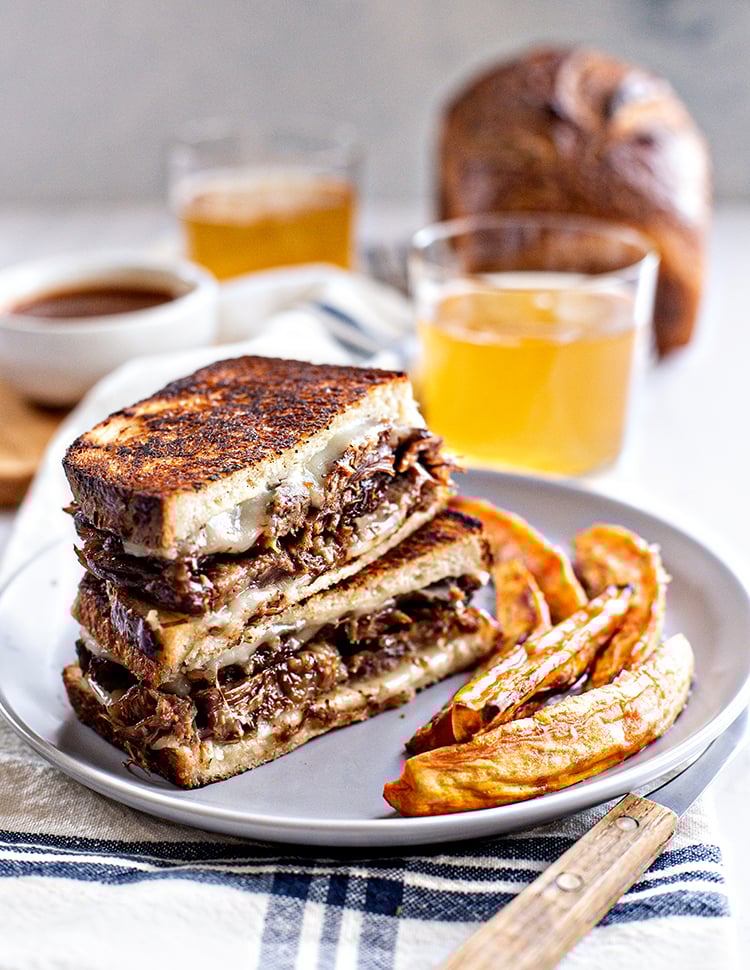
Use these pickles like you would regular store-bought pickles! They’re great in salads, sandwiches, wraps, and more.

Stay Inspired in the Kitchen!
Want more delicious recipes, kitchen tips, and meal inspiration? Sign up for the Good Life Eats Newsletter and get:
✔ Tried-and-true recipes—from quick weeknight meals to special occasion favorites.
✔ Seasonal meal ideas—helping you make the most of fresh, in-season ingredients.
✔ Time-saving kitchen tips—boosting your confidence and creativity in the kitchen.
Pickled Vegetables Recipe
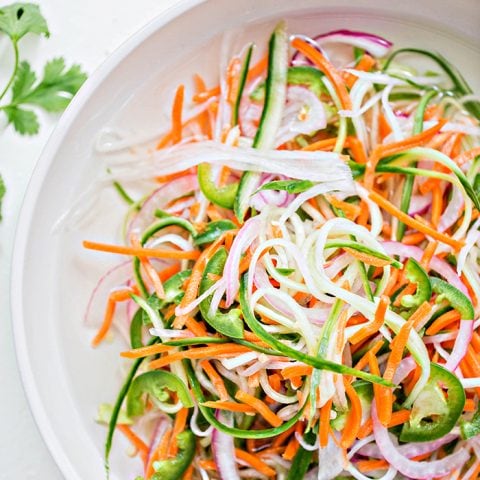
This quick pickled vegetables recipe is so easy – no cooking required! These Vietnamese Bahn Mi inspired vegetables are a great addition to sandwiches, lettuce wraps, and more.
Ingredients
For the Vegetables
- 1/2 cup Jalapeño, sliced thin*
- 1 cup Daikon, Julienne Sliced
- 1 cup English Cucumber, Julienne Sliced
- 1 cup Carrot, Julienne Sliced
- 1 cup Red Onion, thinly sliced
For the Pickling Brine
- 1/4 cup Sugar
- 3/4 cup Water
- 1 1/4 cup Rice Wine Vinegar
- 1 teaspoon Kosher Salt
Instructions
Preparing the Vegetables
- First, prepare all of the vegetables by thinly slicing them. For the daikon, cucumber, and carrot it works best to use a julienne peeler to peel long thin strips. For the red onion and jalapeno, use a sharp knife to slice thin strips of each.
- Then, add the prepared vegetables to a jar. It can be a jar large enough to fit all of the vegetables or they can be divded between two jars if necessary. Make sure that the vegetables are packed tightly.
Preparing the Pickling Bring
- Combine the sugar, water, rice vinegar, and kosher salt in a small saucepan. Taste when the sugar and salt have dissolved, before the mixture boils and is too hot to the touch (take care not to burn your mouth). Add additional salt or sugar if desired.
- Heat the mixture to boiling over medium high heat. Then, remove from heat.
Pickle the Vegetables
- Pour the pickling brine over the vegetables.
- Cool the mixture to room temperature, then seal the jar with the lid and transfer to the refrigerator. Chill for at least 2 hours before serving to ensure the best flavor.
Notes
*Jalapeno: Feel free to adapt this according to your taste preferences! To enjoy the flavor of the jalapeno without the heat, simply remove and discard the seeds of the jalapeno before pickling this recipe. Or, if you'd prefer this recipe to be completely mild, simply omit the jalapeno.
Variations: You don't have to make your pickled veggies Asian-style. Replace the daikon with carrot, cucumber, or regular red radishes and the rice wine vinegar with apple cider vinegar. (More flavor variations listed in the blog post above.)
Storage: Pickled veggies must be refrigerated! They'll last up to 3 weeks and will continue to get stronger the longer they are stored in the pickling brine.
Recommended Products
As an Amazon Associate and member of other affiliate programs, I earn from qualifying purchases.
Nutrition Information:
Yield: 8 Serving Size: 1Amount Per Serving: Calories: 57Total Fat: 0gSaturated Fat: 0gTrans Fat: 0gUnsaturated Fat: 0gCholesterol: 0mgSodium: 281mgCarbohydrates: 12gFiber: 2gSugar: 9gProtein: 1g
GoodLifeEats.com offers recipe nutritional information as a courtesy and is an estimate only. This information comes from online calculators. Although GoodLifeEats.com makes every effort to provide accurate information, these figures are only estimates.
Try Pickling Your Vegetables!
Did You Try This Recipe? I’d love to hear how it turned out! Leave a comment and a review below—your feedback helps others and makes my day.
Share Your Creations!
If you took a photo, tag me on Instagram @goodlifeeats and use #goodlifeeatsrecipes—I’d love to see what you’re cooking up in your kitchen!

Kayte says
Would you need to prepare cabbage differently from the other vegetables? I was wondering the same thing as Shauna
Katie Kick says
I haven’t ever tried to pickle cabbage, so I’m not sure if you would need to do anything different.
Shauna says
Would cabbage work in this? I never seem to see cabbage in pickled veggie recipes
Katie says
I don’t see why not! Let me know if you try it!
Jody Campbell says
Thank’s for the recipe. I used my mandolin and was done I in a flash. Great for my banh mi’s.
Amy says
Can honey or other sweetener be used in the place of sugar?
Katie says
sure!