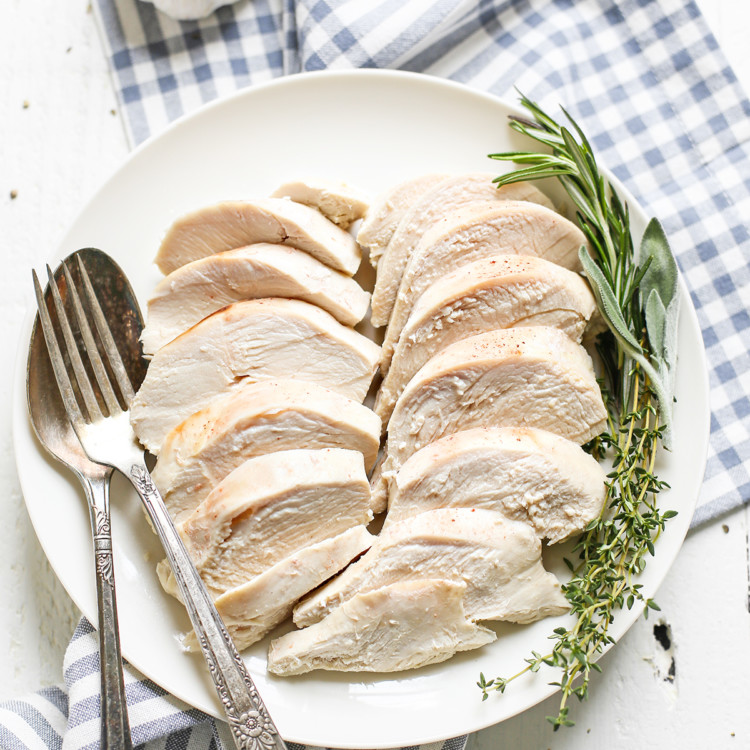
How to Poach Chicken (Thighs, Breasts, or Whole)
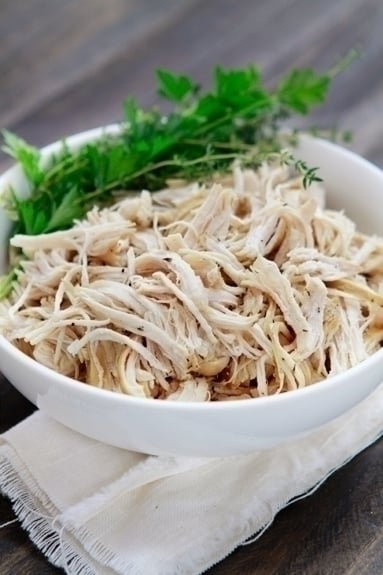
When cooked correctly at barely a simmer, poached chicken is juicy, tender, and flavorful. In this post, I’m sharing How to Poach Chicken perfectly every time as well as my favorite ways to use it.
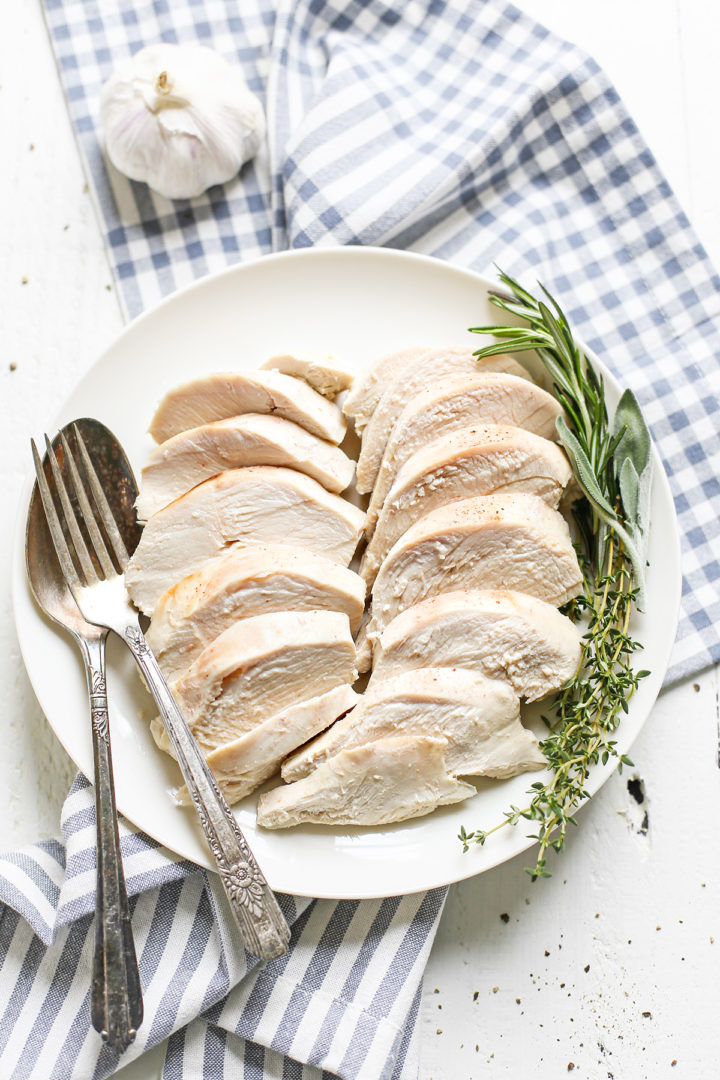
Poached Chicken Is the Ultimate Meal Prep Protein on Busy Weeks!
Poaching chicken involves cooking it in your choice of liquid at a low heat (barely a simmer!) for a longer period of time.
It’s a very easy cooking technique to learn, but it does require more time than pan-frying or roasting chicken. It’s also a more hands-on process since you’ll be adding aromatics, measuring liquids, and then disposing of the poaching liquid after the chicken has finished cooking — BUT it’s my favorite way to meal prep chicken on busy weeks.
Here’s why poaching chicken is so great:
✔ Super Tender and Juicy Results: When done properly, poaching results in tender and juicy chicken every time! You can poach any larger cut of chicken (i.e. breasts, thighs, or even a whole chicken) and the results are always fantastic.
✔ Rich and Flavorful: Poached chicken is very flavorful since it’s often cooked in broth and / or wine that’s been seasoned with herbs and spices, rather than water (which results in bland chicken).
✔ You Control the Salt Levels: Poaching is a wonderful method of cooking chicken without needing to add lots of salt or oil to the meat. If you normally stock up on rotisserie chicken at the grocery store and shred the meat to use in your recipes, try poaching your own chicken instead to lower your sodium intake!
Enjoy!
-Katie
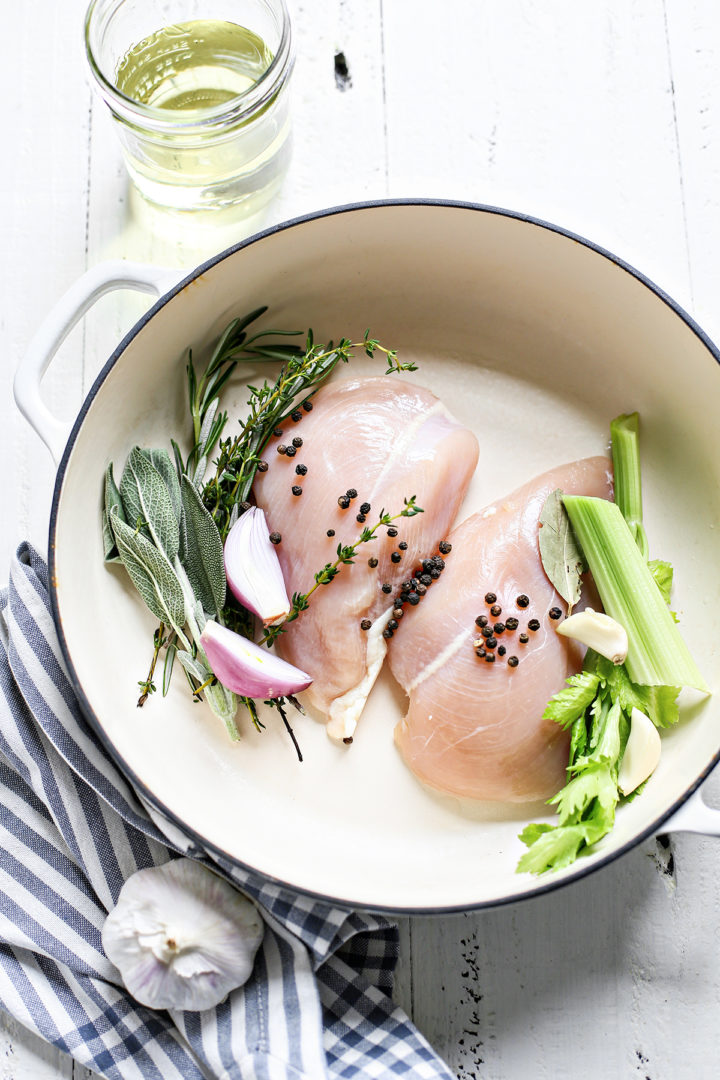
Ingredients You’ll Need
The ingredient list you’ll need for poaching chicken can be as simple or elaborate as you desire. You can pair any combination of poaching liquids you want with your desired blend of fresh or dried herbs, spices, and aromatics. Keep scrolling to the recipe card below for the full list of ingredients with their measurements.
- Chicken — You can use any cut of chicken you’d like, including boneless or bone-in breasts, thighs, or even a whole bird.
- Poaching liquid of choice — Chicken is most commonly poached in vegetable or chicken broth. For added flavor, you may add ½ to 1 cup of white wine to the broth.
- Seasonings — You can use salt, whole peppercorns, bay leaves, etc.
- Herbs— My favorites are fresh or dried rosemary, thyme, sage, or parsley.
- Aromatics — Use what you have! I always add some combination of fresh celery, whole garlic cloves, quartered onion, roughly chopped carrot, and / or a piece of ginger.
How to Poach Chicken 3 Ways
The main thing to remember when poaching chicken is to use a pot that’s large enough to comfortably hold the chicken and poaching liquid, and to also use a heavy-bottomed pot so that the heat is distributed evenly.
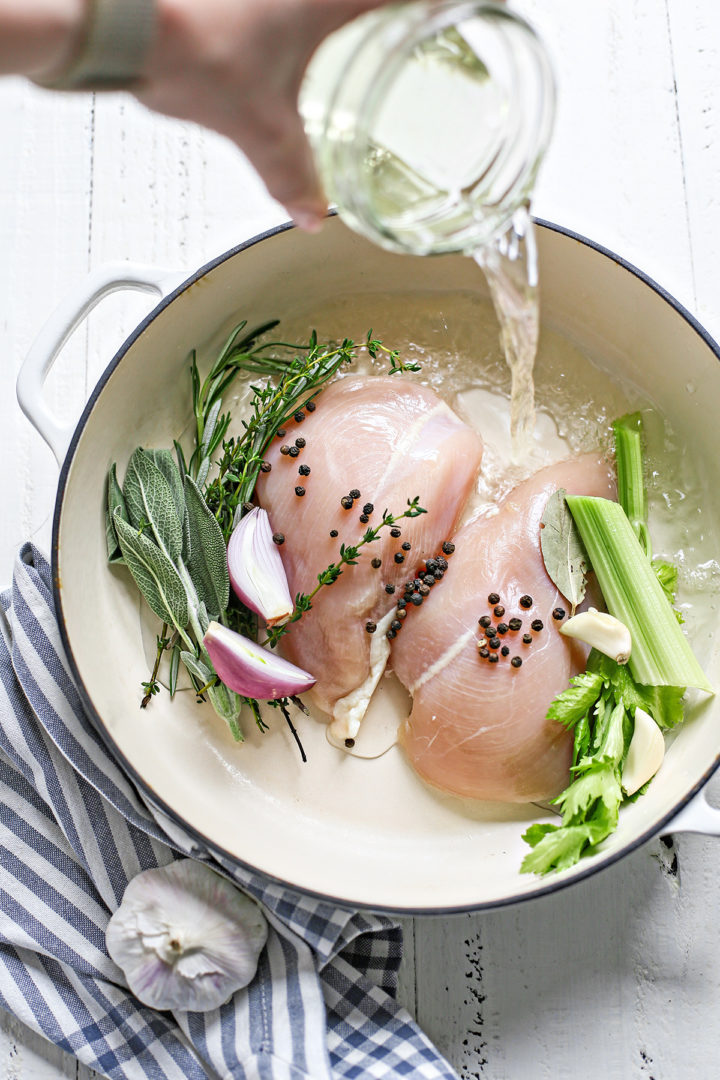
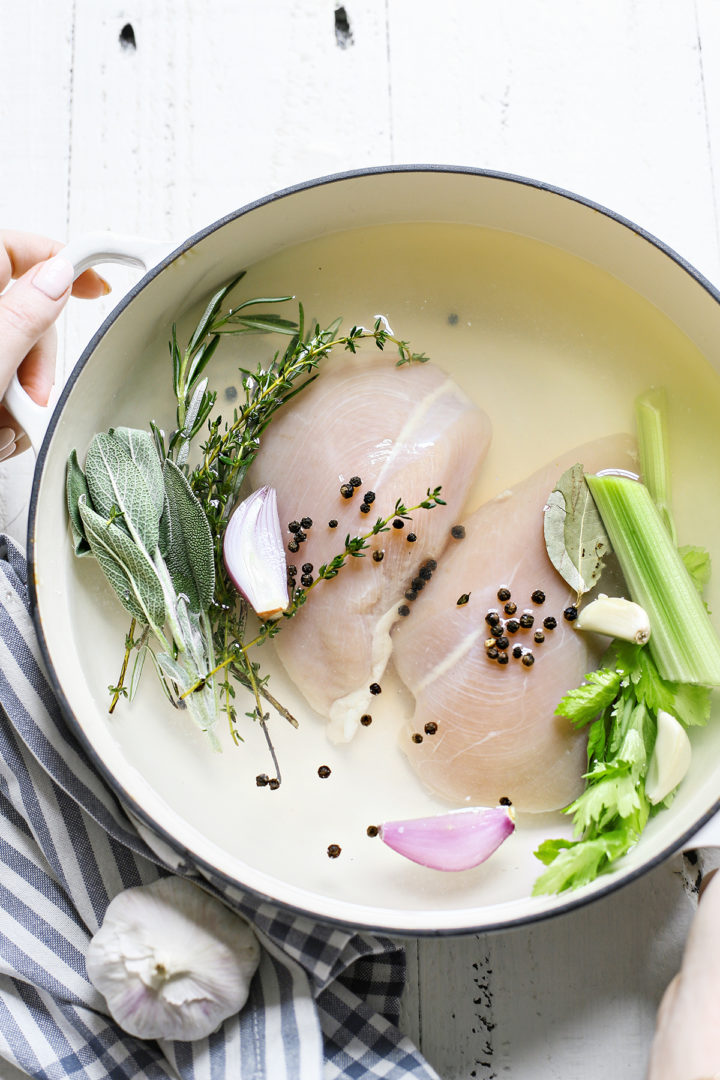
Option 1: Poaching Chicken Breasts
Can you poach chicken breasts? Yes! In fact, chicken breasts are the most common cut of chicken that people poach.
- Place chicken breasts in the bottom of a heavy-bottomed pot. Add your desired aromatics, seasonings, and enough liquid to the pot to just cover the chicken breasts.
- Place the filled pot over medium heat, then heat the water until it reaches 175F – 180F. (The only way you’ll know when the liquid is hot enough is to use a meat thermometer to test the temperature!)
- Once the poaching liquid reaches the correct temperature, reduce the heat to low.
- Partially cover the pot with a lid so that a little steam can escape. Cook the chicken breasts for 10 minutes.
- After 10 minutes have passed, remove the pot from the heat and let the chicken breasts rest for an additional 15 minutes in the hot poaching liquid.
- After 15 minutes, test the chicken breasts to ensure they’re 155F at the thickest portion.
- Remove the chicken breasts to a cutting board or plate. The carry-over heat should “cook” the chicken the rest of the way to 165F, at which point they’ll be safe to eat.
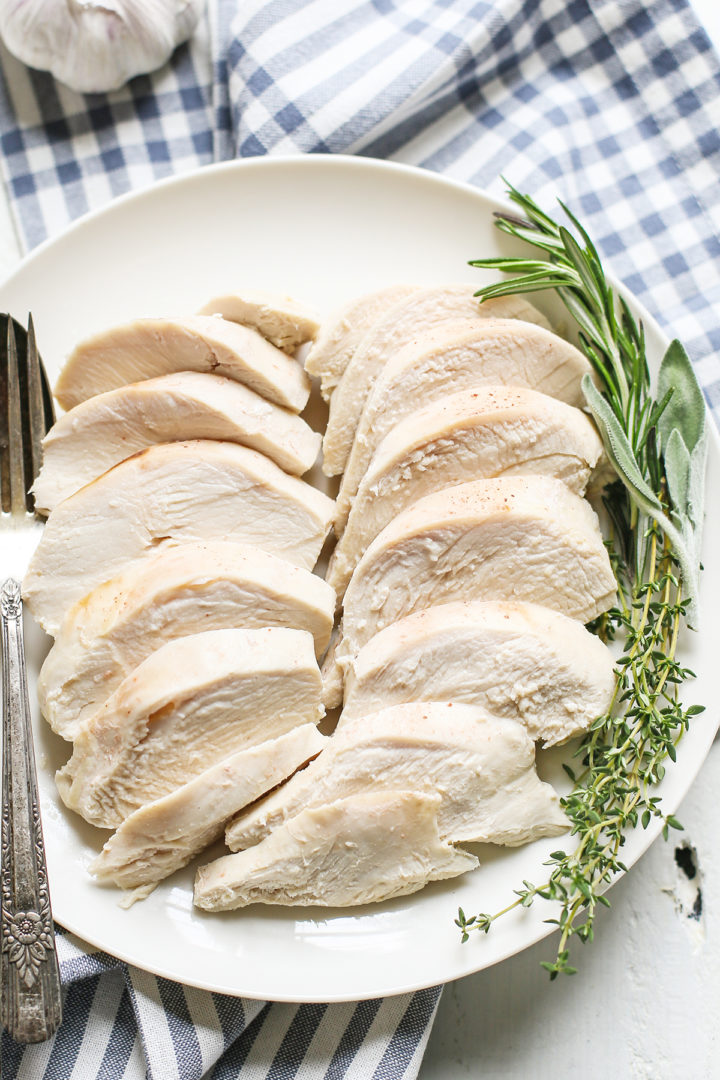
- Slice, shred, or cube the poached chicken breasts as desired.
Option 2: Poaching Chicken Thighs
Can you poach chicken thighs? Yes! Just note that chicken thighs need to sit in the hot poaching liquid longer than chicken breasts since dark meat must reach a higher internal temperature to be deemed safe to eat.
- Follow steps 1 – 4 of the chicken breasts tutorial above (detailed instructions are provided in the recipe card below, don’t worry!).
- After 10 minutes have passed, remove the pot from the heat and let the chicken thighs rest for an additional 25 minutes in the hot poaching liquid.
- After 25 minutes, test the chicken thighs to ensure they’re 175F – 180F at the thickest portion.
- Remove the chicken breasts to a cutting board or plate to let rest for 5 minutes.
- Slice, shred, or cube the poached chicken thighs as desired.
Option 3: Poaching a Whole Chicken
Can you poach a whole chicken? Yes! Poached whole chicken is incredibly flavorful thanks to the many bones and skin that infuse the poaching liquid with deliciousness. However, poaching a whole chicken takes much longer than poaching just breasts or thighs.
- Follow steps 1 – 3 of the chicken breasts tutorial above (detailed instructions are provided in the recipe card below).
- Partially cover the pot with a lid so that a little steam can escape. Cook the chicken for about 1 hour or up to 90 minutes. You’ll know the chicken is done when the meat is nearly falling off the bone.
- Insert a meat thermometer into one of the breasts to check that it’s reached 165F.
- Carefully remove the chicken from the poaching liquid and let rest on a cutting board for about 15 minutes before handling.
- Slice, shred, or cube the poached chicken as desired.
How Long to Poach Chicken
Chicken thighs are dark meat, so they take longer to cook than chicken breasts. And a whole chicken is so large that it needs much longer to cook through when being poached.
Note that the poaching times listed below are just guidelines. All cuts of chicken will vary in size, so use a meat thermometer (and your best judgment!) when determining the doneness of the meat.
- Chicken breasts poaching time: 10 minutes in the poaching liquid on the heat, then another 10 minutes in the poaching liquid off of the heat.
- Chicken thighs poaching time: 10 minutes in the poaching liquid on the heat, then another 25 minutes in the poaching liquid off of the heat.
- Whole chicken poaching time: 1 hour to 90 minutes in the poaching liquid on the heat.
How Can You Tell When Poached Chicken Is Done?
The only accurate way to tell when poached chicken is done is to use a meat thermometer. Insert the thermometer into the thickest part of the chicken and see if it’s reached the following temperatures:
- Chicken breasts: Must be cooked to 155ºF, then removed to a cutting board to rest for another 5 to 10 minutes. The carryover heat should bring the temperature up to the recommend 165ºF.
- Chicken thighs: Must be cooked to 175ºF
FAQs
Got questions about poaching chicken breasts? Here are the answers to a few commonly asked questions. Feel free to leave any other questions in the comments on this post and I’ll respond with answers.
What Are the Best Liquids for Poaching Chicken?
Common poaching liquids for chicken include: water, vegetable broth, chicken broth, turkey stock, milk, and wine.
What Cuts of Chicken Are Best for Poaching?
Chicken breasts are the most common cut of chicken used for poaching, but chicken thighs work well too! I’ve also provided instructions on how to poach a whole chicken in the recipe card below, but the poaching time is much longer than thighs or breasts.
Should You Poach Bone-In or Boneless Cuts of Chicken?
Boneless cuts of chicken will cook more evenly throughout the poaching process, so that’s what I recommend using.
However, you can poach a whole chicken – which contains all sorts of bones! — so feel free to use what you have. So long as you’re using larger cuts of chicken and not, say, chopped chicken pieces, it will be fine.
Can You Poach Chicken With the Skin On?
Yes, just note that chicken skin is very fatty. In a way, that’s great because fat equals flavor, but if you’re poaching chicken specifically because you don’t want to cook it with a form of oil you’ll want to opt for skinless chicken.
If you poach chicken with the skin on, I recommend discarding the skin after cooking. It will be soft and not palatable to eat after poaching.
Why is my poached chicken tough?
If your poached chicken is tough, that means you overcooked it! You either overcooked it entirely, or the poaching liquid was too hot so the exterior cooked through before the interior and became chewy.
Never increase the heat of the stove to speed up the poaching process. It can’t be rushed!
Can you poach frozen chicken?
Yes, you can poach chicken from frozen without needing to thaw it first. However, there’s more room for error when poaching frozen chicken since the chicken will have to sit in the poaching liquid for much longer.
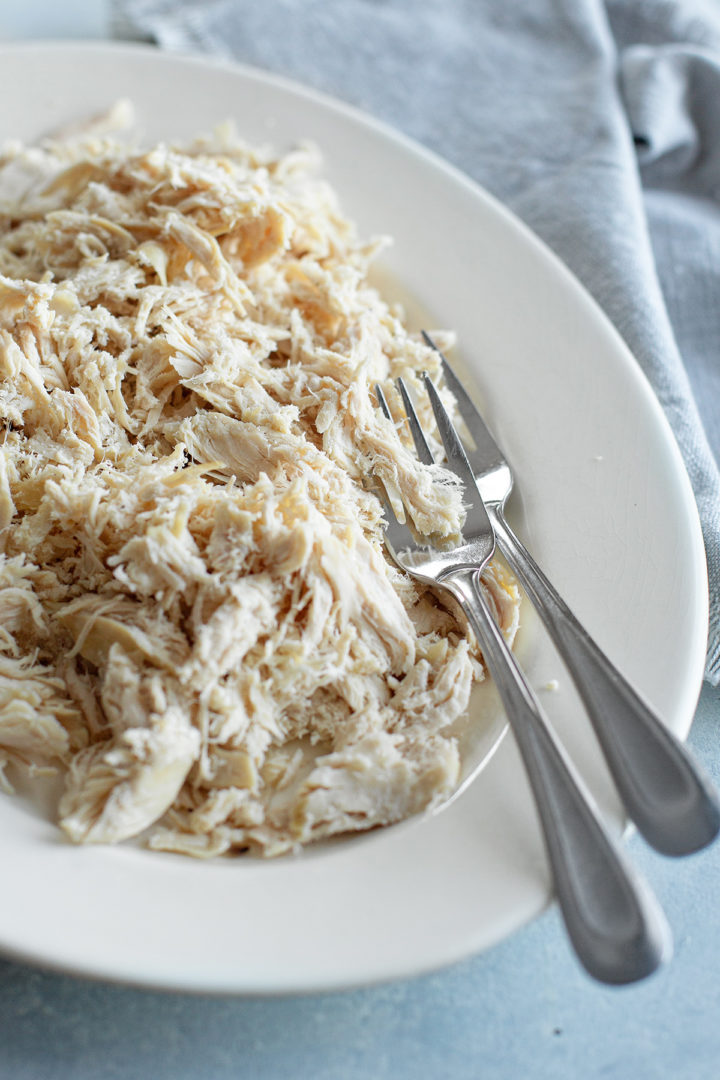
Katie’s Tip: Here’s my favorite method for shredding chicken after I’ve finished poaching it!
Recipes to Make with Poached Chicken
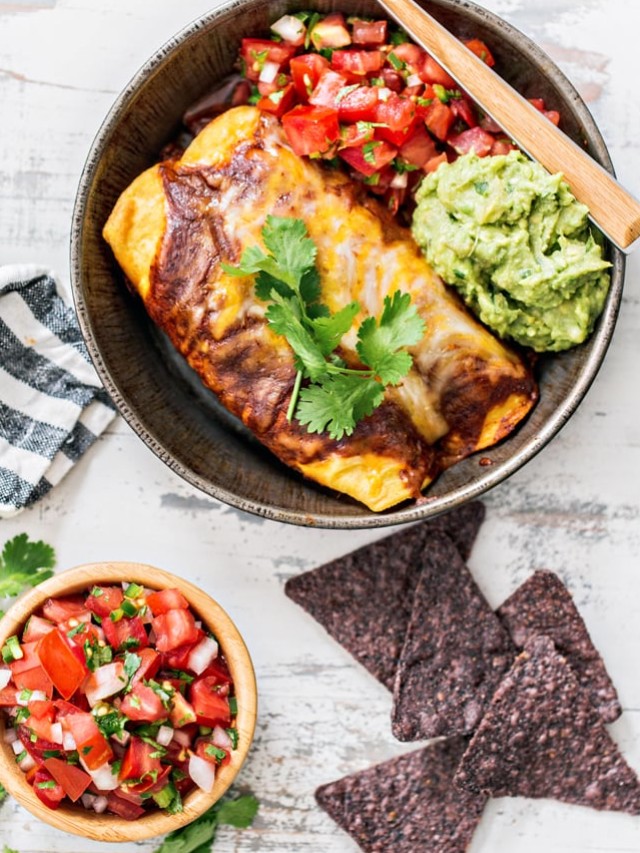
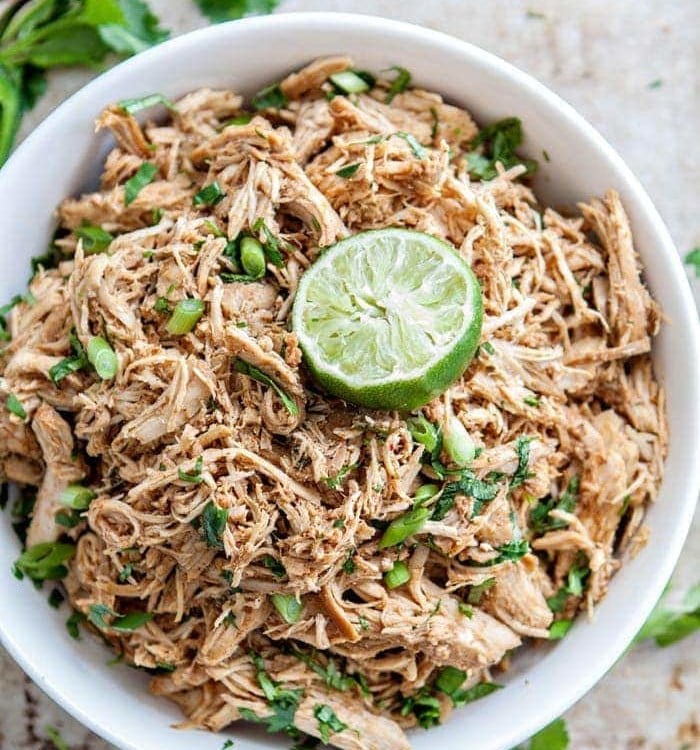
Poached chicken is a Jack of All Trades in the kitchen. It’s plain enough to be tossed into any sandwich, salad, or soup, but flavorful enough to use in any dish without overpowering it.
Tip: If adding to a dish that will be cooked, throw in the poached chicken last and heat just until warmed through. Poached chicken is already cooked, so if you simmer it in a sauce or soup for even longer the chicken will become tough and rubbery.



Stay Inspired in the Kitchen!
Want more delicious recipes, kitchen tips, and meal inspiration? Sign up for the Good Life Eats Newsletter and get:
✔ Tried-and-true recipes—from quick weeknight meals to special occasion favorites.
✔ Seasonal meal ideas—helping you make the most of fresh, in-season ingredients.
✔ Time-saving kitchen tips—boosting your confidence and creativity in the kitchen.
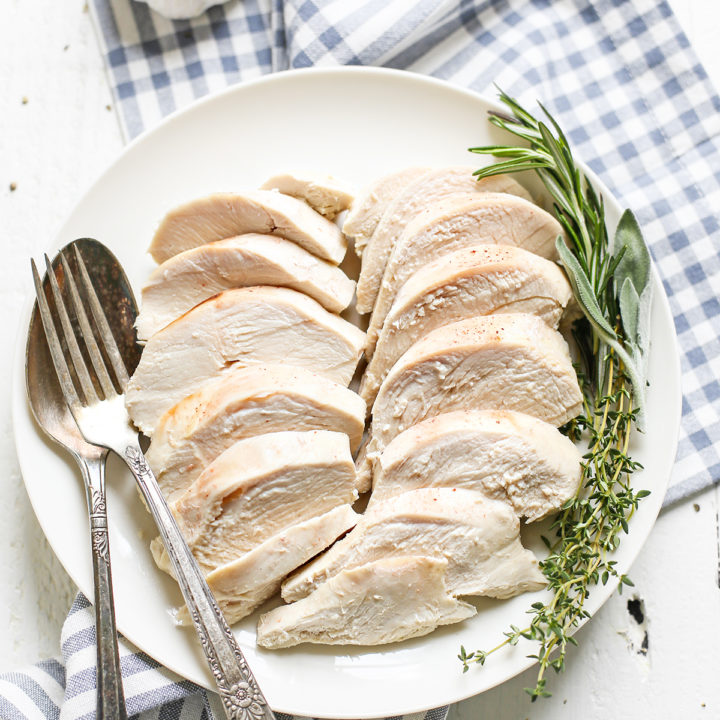
How to Poach Chicken (Thighs, Breasts, or Whole)
When cooked correctly at barely a simmer, poached chicken is juicy, tender, and flavorful. In this post, I’m sharing How to Poach Chicken perfectly every time as well as my favorite ways to use it.
Ingredients
- Chicken (breasts, thighs, or whole)
- Poaching liquid of choice (wine, broth, milk, water)
- Seasonings (salt, whole peppercorns, bay leaves, etc.)
- Herbs (fresh or dried rosemary, thyme, sage, parsley, etc)
- Aromatics (fresh celery, whole garlic cloves, quartered onion, roughly chopped carrot, a piece of ginger, etc.)
Instructions
How to Poach Chicken Breasts
- Place chicken breasts in the bottom of a heavy-bottomed pot.
- Add your desired aromatics and seasonings.
- Add enough liquid to the pot to just cover the chicken breasts.
- Place the filled pot over medium heat, then heat the water until it reaches 175F - 180F. The only way you’ll know when the liquid is hot enough is to use a meat thermometer to test the temperature!
- Once the poaching liquid reaches the correct temperature, reduce the heat to low.
- Partially cover the pot with a lid so that a little steam can escape. Cook the chicken breasts for 10 minutes.
- After 10 minutes have passed, remove the pot from the heat and let the chicken breasts rest for an additional 15 minutes in the hot poaching liquid.
- After 15 minutes, test the chicken breasts to ensure they’re 155F at the thickest portion.
- Remove the chicken breasts to a cutting board or plate. The carry-over heat should “cook” the chicken the rest of the way to 165ºF, at which point they’ll be safe to eat.
- Slice, shred, or cube the poached chicken breasts as desired.
How to Poach Chicken Thighs
- Place chicken thighs in the bottom of a heavy-bottomed pot.
- Add your desired aromatics and seasonings.
- Add enough liquid to the pot to just cover the chicken thighs.
- Place the filled pot over medium heat, then heat the water until it reaches 175F - 180F. The only way you’ll know when the liquid is hot enough is to use a meat thermometer to test the temperature!
- Once the poaching liquid reaches the correct temperature, reduce the heat to low.
- Partially cover the pot with a lid so that a little steam can escape. Cook the chicken thighs for 10 minutes.
- After 10 minutes have passed, remove the pot from the heat and let the chicken thighs rest for an additional 25 minutes in the hot poaching liquid.
- After 25 minutes, test the chicken thighs to ensure they’re 175F - 180F at the thickest portion.
- Remove the chicken breasts to a cutting board or plate to let rest for 5 minutes.
- Slice, shred, or cube the poached chicken thighs as desired.
How to Poach a Whole Chicken
- Place the whole chicken in the bottom of a heavy-bottomed pot.
- Add your desired aromatics and seasonings.
- Add enough liquid to the pot to just cover the chicken.
- Place the filled pot over medium heat, then heat the water until it reaches 175F - 180F. The only way you’ll know when the liquid is hot enough is to use a meat thermometer to test the temperature!
- Once the poaching liquid reaches the correct temperature, reduce the heat to low.
- Partially cover the pot with a lid so that a little steam can escape. Cook the chicken for about 1 hour or up to 90 minutes. You’ll know the chicken is done when the meat is nearly falling off the bone.
- Insert a meat thermometer into one of the breasts to check that it’s reached 165F.
- Carefully remove the chicken from the poaching liquid and let rest on a cutting board for about 15 minutes before handling.
- Slice, shred, or cube the poached chicken as desired.
Notes
For every pound of chicken, you’ll need about 2 cups of liquid. Or, add enough liquid to the pot to just cover the chicken.
Storage: Let the chicken cool until it’s almost room temperature, then seal in airtight containers or zip-top baggies. The chicken will last up to 4 days in the fridge. Freezing: Poached chicken can be frozen whole, in cubes or slices, or shredded for up to 3 months. (Note that when I say frozen whole, I mean that the whole chicken breasts or thighs may be frozen. I don’t necessarily recommend freezing a poached whole chicken since that would take up so much room in the freezer!) I recommend freezing the poached chicken in portions that make sense for you to use or that you commonly use in your cooking (i.e. 1, 2, or 3 cups, 1 pound etc). Label each bag or container with the amount of chicken inside so you know exactly how much you have on hand! Thawing: The best way to defrost poached chicken is to let it thaw overnight in the fridge and then use as desired. However, if you need to use the frozen poached chicken ASAP, place chicken in a zip-top bag and submerge it in COLD tap water. Change the water every 30 minutes until the poached chicken has defrosted.
Try Making Poached Chicken!
Did You Try This Recipe? I’d love to hear how it turned out! Leave a comment and a review below—your feedback helps others and makes my day.
Share Your Creations!
If you took a photo, tag me on Instagram @goodlifeeats and use #goodlifeeatsrecipes—I’d love to see what you’re cooking up in your kitchen!


Leave a Comment